10 Red Flags to Watch for When Choosing a Publishing Company
10 Red Flags to Watch for When Choosing a Publishing Company Choosing a publishing company is a big…
Read article
A good editor makes your book unmistakably yours — only sharper. Here is how to find the right fit and build a lasting partnership.


The right editor is the difference between a manuscript that feels unfinished and a book that reads with clarity and confidence.
A good editor does more than fix grammar. They understand your goals, respect your voice, spot the weaknesses you cannot see, and help you make better decisions about the book.
The hard part is not finding an editor. It is finding the right one for your book, and then building a working relationship that lasts.
Before you contact anyone, figure out what stage your manuscript is at. Different editors solve different problems.
This is the big-picture pass.
For fiction, it covers plot, pacing, character, structure, point of view, and emotional impact. For nonfiction, it covers organization, argument, clarity, chapter flow, and gaps in the content.
Start here when the manuscript still needs major changes.
This works at the sentence and paragraph level.
The editor tackles awkward phrasing, repetition, unclear language, weak transitions, and words that add nothing. The aim is sharper writing that still sounds like you.
This is about accuracy and consistency: grammar, spelling, punctuation, style, and internal contradictions.
Do it after the structural work is finished, not before.
This is the final check before publishing, catching typos, spacing issues, and layout slips in the formatted book.
Proofreading is not a substitute for deeper editing. It is the last step, not the only one.
A skilled editor can still be the wrong fit for your project.
Look for someone with real experience in your genre, your audience, and the level of editing you need. An editor who lives in business books is rarely the right hand for a fantasy novel, and an adult-fiction editor may miss the pacing and vocabulary a children’s book depends on.
Relevant experience means they already know the genre’s conventions and reader expectations, so they work faster and smarter.
Study the editor’s website, portfolio, testimonials, and training. Look for proof they have handled projects like yours: published books they edited, client feedback, sample edits, and clear descriptions of what they offer.
Do not be swayed by a long client list alone. Relevance and communication matter far more than volume.
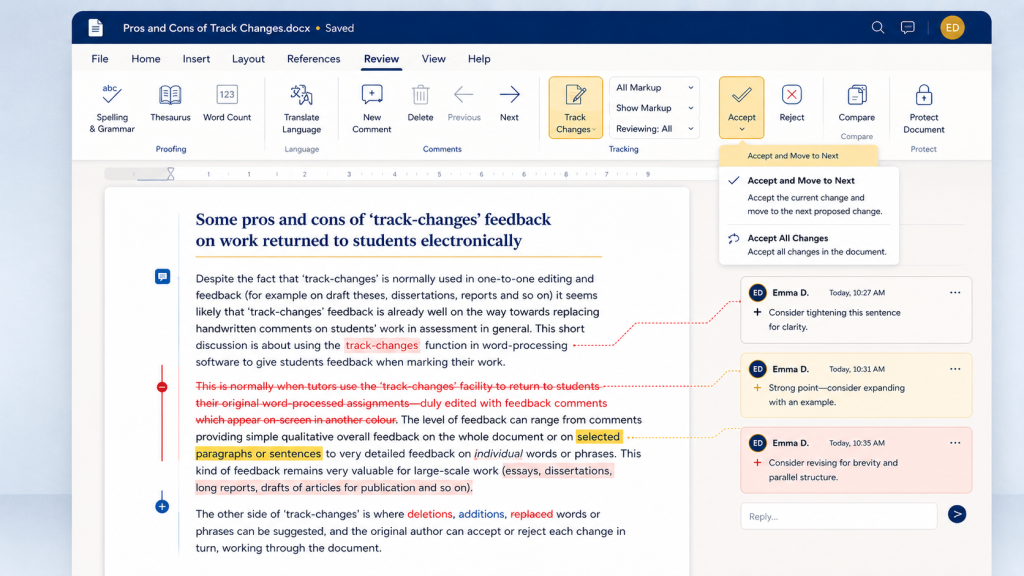
A sample edit is one of the best ways to judge fit.
It shows you how detailed their feedback is, whether their comments are clear, whether they get your voice, and whether their style feels helpful or overwhelming.
A good editor improves the writing without making every sentence sound like their own.
When you review it, ask whether you understand the reasoning behind each change. You do not have to agree with everything, but the feedback should feel thoughtful and useful.
Before hiring, ask about process, pricing, and expectations. A few worth asking:
Clear answers now prevent misunderstandings later.
Editing quotes vary widely, and the cheapest is rarely the best value.
A low quote may buy only basic corrections when your book needs deeper work. A higher one may include an editorial report, margin comments, a style sheet, and follow-up support.
So weigh the whole picture: experience, type of edit, depth of feedback, timeline, deliverables, and revision rounds. Choose on fit and value, not the number at the bottom.
Be cautious if an editor:
A professional is realistic, transparent, and specific about what they can improve.
Editing is personal. You are handing over work that may have taken years.
The editor should be honest without being dismissive, challenging the manuscript while still helping you move forward.
Watch how they communicate before any money changes hands. Do they reply clearly, answer your questions, explain their thinking, and respect your goals? Strong communication early usually signals a smooth project ahead.
Before work starts, confirm the details in writing: the editing level, manuscript length, price, payment schedule, delivery dates, files you will receive, revision policy, and cancellation terms.
A clear scope protects both of you.
Finding a strong editor is valuable. Keeping one makes every future book easier and more consistent.
Unless the editor agreed to work at an early stage, do your own revisions first. Fix the obvious errors and resolve the issues you already know about.
A cleaner draft lets the editor spend their time on the deeper improvements, not the preventable ones.
Do not ask a proofreader for developmental work, or drop in new chapters without discussing it. When the manuscript changes significantly, ask early whether it needs more time or budget. Respecting the agreement builds trust.
You hired an editor to find what you cannot see. You do not have to accept every note, but consider it before rejecting it.
Read comments calmly and look for patterns. If the same issue keeps getting flagged, something underneath probably needs attention, even if you disagree with the fix.
Good editors expect questions. Be specific. Instead of “I don’t like these changes,” explain which change concerns you and why. That kind of exchange usually leads to a better solution.
If the editor needs answers or revised chapters by a date, respond on time. Delays ripple through their schedule and can push you into a later slot. When a delay is unavoidable, say so early.
Tell the editor what worked and where you needed more. If you were happy with the work, a testimonial or referral goes a long way.
And if you will work together again, book early. Experienced editors fill up weeks or months ahead, and a returning editor already knows your voice, your audience, and your recurring habits.
The right editor is not the one who finds the most mistakes. It is the one who understands your book, communicates clearly, respects your voice, and gives you the guidance to make it better.
Start by naming the level of editing you need. Check relevant experience, request a sample edit, compare the full scope, and make sure the relationship feels professional.
Then treat it as a collaboration. Prepare your manuscript, respect the scope, stay open to feedback, and communicate clearly.
A trusted editor becomes one of the most valuable partners in your publishing journey.

Part of the team at Norvex Publishing Services, writing about the craft and business of publishing.
10 Red Flags to Watch for When Choosing a Publishing Company Choosing a publishing company is a big…
Read article
The ISBN is your book’s identity — and whoever owns it controls your listing. Here is why owning…
Read article
Hybrid and vanity presses often keep a share of your royalties for life. Here is how flat-fee publishing…
Read articleThis site is protected by reCAPTCHA and the Google Privacy Policy and Terms of Service apply.
Comments
Join the conversation — we read every comment.