Self-Publishing vs. Traditional Publishing: Which Path Fits Your Book?
Royalties, control, timelines and reach — a clear-eyed comparison to help you choose the publishing route that serves…
Read article

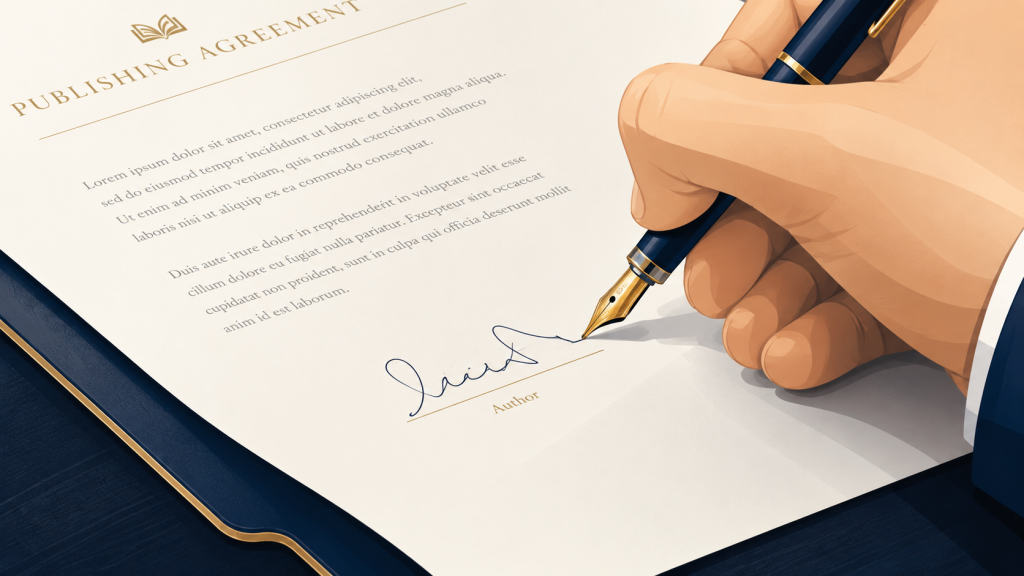
Choosing a publishing company is a big decision. The right provider helps you prepare, publish, and distribute your book professionally. The wrong one leaves you with poor work, unclear ownership, hidden fees, and little control over your own book.
Before you sign anything or pay for a package, look closely at how the company communicates, charges, and handles your rights.
Here are ten warning signs no author should ignore.
No honest publishing company can guarantee your book will become a bestseller.
Sales depend on too many things outside anyone’s control: the quality of the book, audience demand, pricing, competition, distribution, marketing, and how readers respond.
So treat any promise of guaranteed sales, rankings, media coverage, or “publishing success” as a warning sign. A professional talks about realistic goals and strategy, not results it cannot deliver.
You should have time to review a package, compare providers, ask questions, and read the contract.
Watch for the classic pressure moves: discounts that expire within hours, repeated calls demanding payment, claims that only one package is left, guilt over “delaying,” or a request for money before anyone has explained the service.
A trustworthy provider lets you make an informed decision. It does not rush you into one.
Costs should be on the table before work begins.
Be careful when a company dangles a low starting price but won’t explain what’s included or what shows up later. Hidden charges tend to hide in editing add-ons, extra revisions, annual account fees, file-release fees, ISBN charges, distribution cuts, mandatory marketing upgrades, and renewals.
Ask for a detailed written scope with the total price, payment schedule, deliverables, and any possible extra costs.
A verbal promise is not enough.
The agreement should state exactly what the company will deliver, when, and how many revisions you get. A proper scope covers the editing level, cover design, formatting, ebook conversion, publishing platforms, ISBN arrangements, distribution, marketing, the timeline, revision limits, and who owns the final files.
Without that document, it is hard to challenge incomplete or low-quality work later.
You should understand exactly how you get paid.
Find out who receives the retailer payments, whether the company takes a percentage, whether royalties come straight to you, and how often you’ll see sales reports. If the answers are vague or the company dodges the question, be cautious.
Paying for publishing services should not mean handing over a permanent slice of your book’s income.
Wherever possible, your book should be published through accounts you own.
When the company uses its own accounts instead, you end up depending on it for everything: royalty payments, sales reports, price changes, description updates, new files, category changes, and even removing or moving the book.
That dependence becomes a real problem if the relationship ends. Confirm who owns the retailer and distribution accounts before publication, not after.
Your contract should say plainly who owns what: the manuscript copyright, the cover design, the formatted interior, the ebook and source files, any illustrations, the ISBN, and the publishing account.
Some companies quietly keep design files or stop authors from using finished materials elsewhere. Others bury broad rights clauses that hand them more control than they need.
Do not assume you own everything just because you paid for it. Get the ownership terms in writing.
A real publishing company can show you completed books or explain its experience.
Look for published titles, cover and formatting quality, genre experience, client testimonials, and live retailer listings you can actually check.
Be wary of a company that shows only generic mockups, passes off stock images as portfolio work, or cannot name a single book it helped publish. The portfolio doesn’t need to be huge, but it should be real and relevant.
Communication usually gets harder after payment, not easier. So watch how a company behaves during the consultation.
Slow or incomplete replies, dodged questions, contradictory answers, no clear point of contact, or pricing that keeps shifting are all signs of what’s coming. A professional communicates clearly, documents decisions, and tells you who will manage your project.
Marketing packages love impressive language. “Global exposure,” “maximum visibility,” and “premium promotion” mean nothing on their own.
A real plan tells you which platforms it uses, how many posts or campaigns are included, who creates the content, whether ad spend is covered, who it targets, how long it runs, and what results get reported.
Do not pay for vague promises of exposure. Pay for a specific, measurable strategy.
When you cut through everything above, these are the questions that surface the truth. Ask the provider directly:
The company should answer all of these clearly, and put the answers in writing.
Flip every red flag around and you get the profile of a provider worth hiring.
They offer transparent pricing and a written scope. They state ownership terms plainly and set realistic expectations. They communicate professionally, hold to defined timelines, and list specific deliverables. They give you direct access to your sales information, keep royalty arrangements clear, and let you review the contract before you commit.
In short, they make publishing your book clearer, not more confusing.
Not every company that charges authors is dishonest. Editing, design, formatting, distribution, and publishing support are skilled work that costs real money.
The real issue is transparency.
Before you choose, confirm what you’re paying for, what you’ll own, who controls the accounts, how royalties work, and whether future fees apply.
A good publishing partner makes the process clearer. It never uses confusion, pressure, or big promises to win your business.

Part of the team at Norvex Publishing Services, writing about the craft and business of publishing.

Royalties, control, timelines and reach — a clear-eyed comparison to help you choose the publishing route that serves…
Read article
Hybrid and vanity presses often keep a share of your royalties for life. Here is how flat-fee publishing…
Read article
The ISBN is your book’s identity — and whoever owns it controls your listing. Here is why owning…
Read articleThis site is protected by reCAPTCHA and the Google Privacy Policy and Terms of Service apply.
Comments
Join the conversation — we read every comment.