10 Red Flags to Watch for When Choosing a Publishing Company
10 Red Flags to Watch for When Choosing a Publishing Company Choosing a publishing company is a big…
Read article
Royalties, control, timelines and reach — a clear-eyed comparison to help you choose the publishing route that serves your goals.


You have written the last sentence, closed the file, and felt that mix of pride and emptiness that comes with finishing a book.
Then a harder question shows up. How do you actually get it into readers’ hands?
For most authors, the answer comes down to two routes: self-publishing or traditional publishing.
The two are more different than they first look. They differ in who pays, who decides, how long it takes, and how much of each sale you keep.
A traditionally published author might wait one to three years from signing to shelf and earn around 10 to 15 percent in royalties, with the publisher covering production.
A self-published author can be on sale within months, keep as much as 70 percent on ebook sales, and pay for editing, design, and marketing out of pocket.
Neither picture is better than the other. They are simply different trades.
The right one depends on your book, your goals, your budget, and how involved you want to be.
Self-publishing means releasing a book independently rather than submitting it to a traditional publishing company.
The author becomes the publisher. That means the responsibility for preparing and releasing the book rests with them.
This may include editing, proofreading, cover design, interior formatting, ISBN registration, distribution, pricing, and marketing.
It does not mean doing everything alone. Most serious independent authors hire professionals such as editors, cover designers, illustrators, and formatters to bring their books up to standard.
The real difference is control. You decide how the book looks, when it launches, what it costs, and where it sells.
You also carry the upfront cost. In return, you keep ownership of the book and a larger share of the revenue from every copy.
Traditional publishing starts with getting picked.
You submit a manuscript or proposal to literary agents or publishers. In most cases you begin with an agent, who reviews the work, sharpens its commercial position, and pitches it to editors.
Some publishers accept direct submissions, but the largest houses rarely do.
If a publisher acquires the book, you sign a contract. The publisher then takes over most of the production: editing, cover design, formatting, printing, distribution, and some marketing.
They usually cover the costs and may pay an advance. An advance is money paid up front against future royalties.
In return, the publisher licenses certain rights to publish and sell the book. You give up a measure of control over things like the title, cover, price, and release date.
What you gain is access to an established industry system. What it costs you, beyond control, is time and a smaller share of each sale.
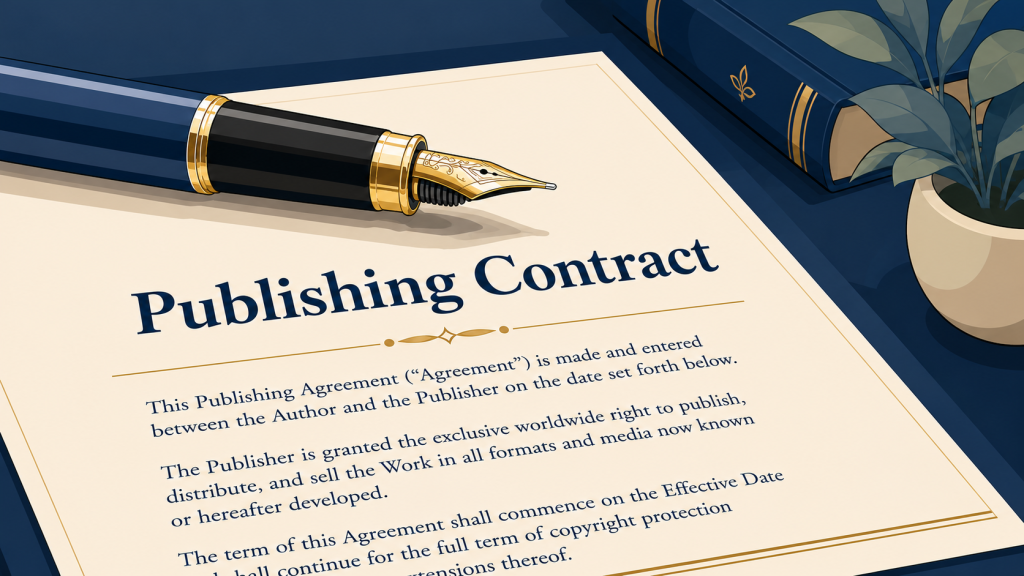
| Factor | Self-Publishing | Traditional Publishing |
|---|---|---|
| Creative control | Author controls most decisions | Publisher controls or influences many decisions |
| Timeline | Often weeks to months | Often one to three years |
| Upfront costs | Usually paid by the author | Usually paid by the publisher |
| Royalties | Higher share per sale | Lower share per sale |
| Rights | Generally kept by the author | Some rights licensed to the publisher |
| Distribution | Through platforms and distributors | Stronger access to retail channels |
| Marketing | Mainly the author's job | Shared, but authors still promote |
| Approval | No gatekeeper required | Requires acceptance by an agent or publisher |
Neither model guarantees success. A beautifully produced book can still stall if it is poorly positioned, and a publishing contract is no promise of strong sales or a lasting spot on bookstore shelves.
The clearest advantage is control.
Every meaningful decision is yours to make and yours to change: title, cover, content, price, timing, and marketing.
Speed is the second draw. There is no querying and no waiting for an acquisitions meeting.
Once the book is professionally prepared, it can be on sale in weeks.
You also keep your rights. Print, ebook, audio, translation, and adaptation stay with you unless you license them out.
You keep a larger cut of each sale. The exact percentage depends on the platform, format, and price.
And you keep flexibility. You can revise a description, fix an error, adjust a price, or release a new edition whenever you want.
The cost of all that control is that you own the problems too.
You pay for editing, proofreading, design, formatting, and marketing. The total depends on the book’s length and complexity.
Quality control lands on you. The wrong editor or an amateur cover can quietly sink reader trust.
Publishing a book is technically easy. Producing a book that competes is not.
Marketing is a continuous job. You build early awareness, gather reviews, and keep the book visible long after launch.
Bookstore placement is harder to secure. Being available through a distributor is not the same as sitting on a shelf.
Running all of this means treating your book, at least partly, as a business.

Traditional publishing hands you a team.
Editors, designers, production staff, publicists, and distribution specialists all contribute. That lifts a lot of project management off your shoulders.
A legitimate publisher covers the core production costs. You should never be asked to pay them for editing, design, or printing.
They may also offer an advance. The amount ranges widely depending on the author, the book, and the market.
The other real benefit is reach.
Publishers tend to have relationships with bookstores, libraries, wholesalers, reviewers, and media. Those are hard for an independent author to build alone.
A traditional deal can also carry recognition that still matters in certain literary, academic, and professional circles.
The first cost is getting in at all.
Authors can spend months or years querying. Rejection is common, even for strong work.
Acquisition turns on market demand, timing, and fit with a publisher’s list.
The second cost is time. A year or more can pass between a signed contract and a finished book.
You also give up control over decisions like the title, cover, and release date.
Royalties are lower because the publisher funds production and keeps a larger share.
Contracts license rights across formats, languages, and territories. It is worth knowing exactly what you are granting and for how long.
One misconception is worth killing early.
A publishing deal does not mean the marketing is handled for you. Many authors are still expected to build a platform, meet readers, and drive their own launch.
Self-publishing may be your path if you:
Traditional publishing may be your path if you:
Plenty of writers do both, moving between the two models depending on the project. They are often called hybrid authors.
You might place a commercial novel with an agent while self-publishing a niche nonfiction title.
You might query agents for a set window. If no offer comes, you prepare the book for independent release.
Different books call for different strategies. The best path for this manuscript may not be the best path for your next one.

There is a third category worth learning to spot, because it is where authors most often get hurt.
Know the difference between traditional publishers, legitimate self-publishing services, and vanity publishers.
A traditional publisher invests in your book. It does not charge you mandatory publishing fees.
A professional self-publishing service is clear about what you are buying, such as editing, design, formatting, or distribution setup, and what it costs.
A vanity publisher blurs the line. It presents itself as selective or traditional while charging steep package fees and making inflated promises about sales and shelf placement.
Before you sign anything, read carefully for these terms:
Paying professionals for clearly defined services is normal. Paying a company that hides its business model or misrepresents what it offers is not.
Lean toward self-publishing when you value control, speed, flexibility, ownership, and a higher share of each sale, and when you are ready to invest in quality and manage the book yourself.
Lean toward traditional publishing when you value publisher-funded production, established distribution, literary representation, and industry access, and when you have the patience the process asks for.
Neither route is more professional or more successful by default.
The outcome rests on the quality of the manuscript, the team behind it, real market demand, and how well the book is positioned and promoted.
Prestige is a poor thing to decide on.
So ask the practical questions instead.
How quickly do you want to publish? How much control do you want to keep? Can you invest in professional preparation? How involved do you want to be in the business side?
Your answers point the way more reliably than any assumption about which path is better.
The right choice is simply the one that fits this book and the kind of author you want to become.

Part of the team at Norvex Publishing Services, writing about the craft and business of publishing.
10 Red Flags to Watch for When Choosing a Publishing Company Choosing a publishing company is a big…
Read article
Hybrid and vanity presses often keep a share of your royalties for life. Here is how flat-fee publishing…
Read article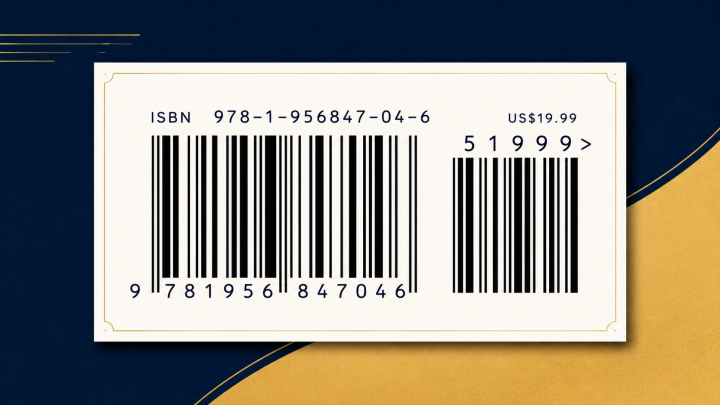
The ISBN is your book’s identity — and whoever owns it controls your listing. Here is why owning…
Read articleThis site is protected by reCAPTCHA and the Google Privacy Policy and Terms of Service apply.
Comments
Join the conversation — we read every comment.