10 Red Flags to Watch for When Choosing a Publishing Company
10 Red Flags to Watch for When Choosing a Publishing Company Choosing a publishing company is a big…
Read article
The ISBN is your book’s identity — and whoever owns it controls your listing. Here is why owning your own ISBN matters and how to make sure you do.

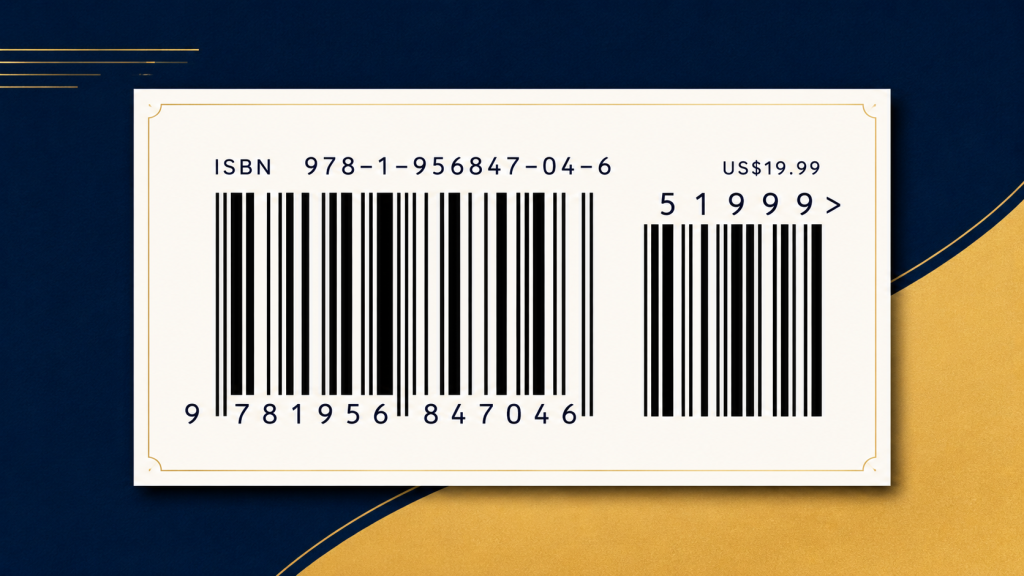
An ISBN looks like a simple number on the back cover, but it carries real weight in how your book is published.
For independent authors, who controls that number can affect your publishing rights, retailer listings, imprint name, distribution, future updates, and even your ability to move the book to another service later.
So before you accept a free ISBN or buy a publishing package, it pays to know whose name will be attached to your book.
ISBN stands for International Standard Book Number.
It is a unique identifier that tells one edition and format of a book apart from another. Retailers, libraries, distributors, and publishing databases use it to find and track books.
A hardcover, paperback, ebook, and audiobook each usually need their own separate number.
An ISBN identifies a specific edition. It does not protect your manuscript or prove who wrote it.
This is the point authors most often get wrong, so it is worth settling early.
The ISBN and the copyright are two different things. Copyright protects the creative work. An ISBN just identifies a published edition.
A publisher can be attached to your ISBN without owning your copyright. And you can own your copyright while using an ISBN supplied by a platform.
So don’t let ISBN control answer every ownership question. Your contract should still spell out who owns the manuscript, the cover design, the formatted files, and the publishing accounts, who receives royalties, and whether the agreement can be ended.
Whoever is registered as the publisher of the ISBN is responsible for the publishing record tied to it.
Buy an ISBN directly from the authorized agency in your country, and you (or your publishing business) are normally listed as the publisher of record.
Get one from a self-publishing platform or service, and that company may be listed as the publisher or imprint instead.
That doesn’t hand them your copyright. But it does shape how the publisher appears in book databases and how easily you can manage the edition elsewhere.
Many platforms hand out free ISBNs, which is genuinely useful if you want to keep costs down and publish quickly.
The catch is that a free ISBN is usually registered to the platform giving it to you.
In practice, that can mean the platform appears as your publisher of record, the ISBN only works through that platform, and moving to another service later may require a brand-new ISBN and a new edition record. You may also have less say over the publisher metadata.
A free ISBN is not a bad choice. Not understanding its limits is.
Control matters most when you want to build a lasting publishing brand or sell through several channels.
The ISBN record often decides which publisher or imprint shows up in industry databases.
Own your ISBN, and you can publish under your own name, company, or imprint. Use a service’s ISBN, and its name may appear instead.
For many authors that is a non-issue. But for business authors, speakers, and anyone building a catalog, the publisher name is part of the brand.
An author-controlled ISBN gives you more freedom to switch printers, distributors, or services.
A platform-provided ISBN is often locked to that platform. Moving the book can mean a new ISBN and a new edition record, which may disrupt your retailer listings, existing reviews, sales history, library records, and any links you already used in marketing.
Your book’s metadata includes the title, subtitle, author name, publisher, publication date, format, description, categories, and pricing.
Whoever holds the ISBN record often controls how some of that is submitted or updated. Confirm who manages your metadata and whether you can make corrections yourself.
Plans change. You might swap providers, release a new edition, expand distribution, or move to a new imprint.
Owning the ISBN won’t erase every complication, but it does cut your dependence on a single company.
Often, yes.
When the publisher of record changes, the new edition usually needs a new ISBN.
You may also need a new one for a different format, a revised edition, major content changes, or a switch from paperback to hardcover.
Small corrections don’t always require a new number, but check the rules for your market and distribution platform.
It comes down to how much control you want.
Buying your own makes sense if you plan to publish several books, want to create your own imprint, want your name or business listed as the publisher, expect to use multiple distributors, or are building a long-term author business. In short, it fits anyone who values flexibility and a consistent publishing identity.
A free ISBN is fine if you’re publishing through one platform, don’t mind that platform appearing as publisher, want to keep early costs low, and don’t expect to move the edition. It’s also a reasonable way to test a project before investing more.
The right call depends on your goals, budget, and strategy.
An imprint is the publishing name displayed on a book.
Independent authors sometimes create one to give their books a consistent identity, which helps when publishing a series or books tied to a business.
Owning ISBNs under your imprint keeps your records consistent across editions, retail listings, distributor databases, library catalogs, and your own marketing.
An imprint doesn’t have to be a big company, but use the name accurately and follow any local business rules.
Before accepting an ISBN inside a package, ask:
Get the answers in writing before publication begins.
Be cautious when a provider:
A trustworthy service explains the ISBN arrangement in plain language.
Your ISBN doesn’t decide who wrote your book or who owns the copyright. But it does shape how the book is identified, distributed, updated, and presented to the industry.
A free ISBN can be perfectly fine if you’re publishing through one platform. Buying your own is often better when you want control over your publisher name, metadata, distribution, and future editions.
Before you publish, ask one simple question: who will be listed as the publisher of record, and can this ISBN travel with the book if I move it?
The number is small. The decisions attached to it can shape your book for years.

Part of the team at Norvex Publishing Services, writing about the craft and business of publishing.
10 Red Flags to Watch for When Choosing a Publishing Company Choosing a publishing company is a big…
Read article
Royalties, control, timelines and reach — a clear-eyed comparison to help you choose the publishing route that serves…
Read article
Hybrid and vanity presses often keep a share of your royalties for life. Here is how flat-fee publishing…
Read articleThis site is protected by reCAPTCHA and the Google Privacy Policy and Terms of Service apply.
Comments
Join the conversation — we read every comment.